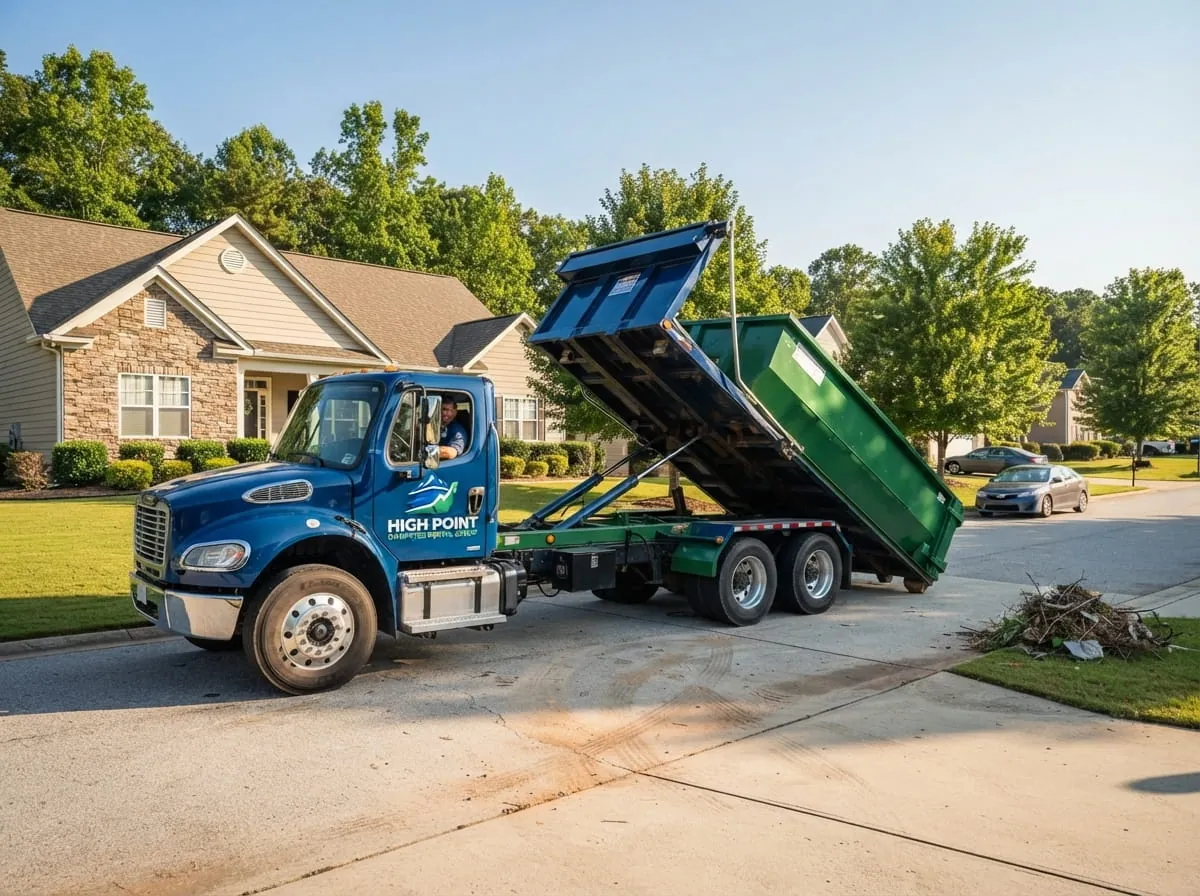
One of the most common questions we hear at High Point Dumpster Rental Group is deceptively simple: "Can I throw this in the dumpster?" The honest answer is that most of what you want to clear out is perfectly fine to toss, but a surprising number of everyday items are either banned outright by North Carolina law or restricted because of how they behave in a landfill. Putting the wrong item in your roll-off can trigger overage fees, contamination charges, or a rejected load that gets dumped right back in your driveway.
This guide walks you through exactly what belongs in a dumpster here in High Point and Guilford County, what does not, and why those rules exist. We will also point you to the right way to get rid of the banned items so nothing slows down your project. Our goal is simple: help you fill your container with confidence and avoid the surprises that catch homeowners and contractors off guard.
What You Can Put in a Dumpster
The good news is that the vast majority of debris from a cleanout, remodel, or renovation is accepted without any issue. A roll-off dumpster is built to handle bulky, heavy, and mixed loads that your weekly curbside cart simply cannot. Here is what we happily accept in our containers across High Point.
Household Junk and Clutter
Garage cleanouts, attic purges, basement declutters, and general spring cleaning all produce the kind of mixed junk that is ideal for a roll-off. Think boxes of old paperwork, broken toys, worn-out luggage, kitchenware, decorations, clothing, and the general accumulation of life. If you are clearing out an entire property, our junk removal service can handle the heavy lifting, or a dumpster lets you work at your own pace.
Furniture
Couches, sofas, recliners, dressers, bed frames, desks, bookshelves, dining sets, and tables are all accepted. Upholstered furniture takes up a lot of cubic yardage, so plan your container size accordingly. If you are doing a full home or estate cleanout, our team can help you pick a size that handles the bulk without paying for air.
Construction and Demolition Debris
Remodeling projects are what roll-off dumpsters were made for. Drywall, lumber, framing, trim, cabinetry, countertops, tile, brick, and general demolition debris are all accepted. Just keep an eye on weight, since dense materials like tile and masonry add up fast. For a deeper dive on this, see our guide on how to dispose of construction debris.
Yard and Storm Debris
North Carolina gets its share of severe weather, and High Point is no stranger to downed limbs, split trees, and wind-blown wreckage after a storm rolls through Guilford County. Branches, brush, leaves, shrubs, stumps, and general green waste are all accepted. If your project is mostly organic material, ask us about our yard waste removal option, which is often the more economical route for green-only loads.
Roofing Materials
Tearing off an old roof produces a shocking amount of weight in a small footprint. Asphalt shingles, roofing felt, underlayment, and flashing are all accepted. Because shingles are so dense, a dedicated roofing load usually calls for a smaller container rated for heavy material rather than a large one you will never be able to fill without exceeding the weight limit.
Flooring
Carpet, padding, laminate, hardwood, vinyl plank, and tile flooring all go in the dumpster without a problem. Carpet and padding are bulky but light, while tile is the opposite, so mixing the two can help you balance a load efficiently.
What You Cannot Put in a Dumpster
This is where things get important. North Carolina has specific landfill disposal bans, enforced through the North Carolina Department of Environmental Quality (NC DEQ), and local landfills in Guilford County will reject loads that contain prohibited materials. These rules exist to protect groundwater, keep recyclable and hazardous materials out of the ground, and comply with state law. Here is what must stay out of your container.
Hazardous Waste
Anything flagged as hazardous is strictly prohibited. That includes solvents, pesticides, herbicides, pool chemicals, motor oil, antifreeze, gasoline, and cleaning agents with corrosive or flammable warnings. These substances can leach into soil and water, react dangerously with other debris, and pose a serious risk to the crews who handle the load. Hazardous waste is never accepted in a roll-off, full stop.
Paint and Chemicals
Liquid paint, stains, lacquers, and other wet finishes cannot go in the dumpster because they are classified as hazardous and can contaminate an entire load. There is a simple workaround: latex (water-based) paint can be dried out by leaving the lid off, stirring in cat litter or a paint hardener, and letting it solidify. Once fully dry and solid, empty latex cans are generally acceptable. Oil-based paint must always go to a household hazardous waste facility.
Tires
Tires are banned from North Carolina landfills by state law. They trap methane, float to the surface of buried loads over time, and are a notorious breeding ground for mosquitoes when they collect water. Because of this ban, we cannot accept tires in our dumpsters. Most tire retailers will take your old tires for a small per-tire scrap fee, and Guilford County accepts them at designated facilities.
Batteries
Car batteries, lithium-ion batteries, and rechargeable batteries are prohibited. Lead-acid car batteries contain corrosive acid and heavy metals, while lithium batteries are a genuine fire hazard in compaction equipment. Auto parts stores take car batteries for recycling, and many retailers host drop-off bins for smaller rechargeable cells.
Appliances with Freon
Refrigerators, freezers, air conditioners, dehumidifiers, and freezer chests contain refrigerant (freon) that must be professionally evacuated before disposal. Releasing refrigerant into the atmosphere is illegal under federal law. These "white goods" are also on North Carolina's landfill ban list, so they cannot go in the dumpster until a certified technician removes the freon. Guilford County accepts white goods at its facilities for proper recycling.
Electronics
Televisions, computers, monitors, printers, and other electronics are banned from North Carolina landfills. E-waste contains lead, mercury, and other heavy metals, and the state mandates that it be recycled rather than buried. High Point and Guilford County offer e-waste drop-off programs, and many electronics retailers accept old devices. See our overview of recycling and waste disposal in High Point for current drop-off options.
Mattresses (Fees Apply)
Mattresses and box springs are not strictly banned, but they are notoriously difficult to compact and process, so most landfills charge a special handling fee for each one. We can usually accept them with a per-item surcharge, so just let us know in advance so we can quote it accurately rather than surprising you at the end.
Propane Tanks
Propane cylinders, whether full or "empty," are pressurized and can explode when crushed. They are prohibited in dumpsters for obvious safety reasons. Exchange them at a propane refill station, or return them to a retailer that accepts tank drop-offs.
Weight-Sensitive Materials: Concrete, Dirt, and Red Clay
Some materials are not banned at all but require special handling because of their extreme weight. Concrete, asphalt, brick, dirt, gravel, sand, and North Carolina's signature red clay are dense enough that just a partial load can exceed a container's weight rating and push you into heavy overage charges. A dumpster that looks only half full of concrete can already be over the tonnage limit.
For these heavy materials, we recommend a dedicated "clean fill" container and loading only one type of material at a time. This keeps the material clean enough to be recycled and crushed for reuse, and it keeps your bill predictable. Never mix concrete or dirt loads with mixed trash, since contamination makes the entire load unrecyclable and far more expensive to dispose of. If your project involves a patio tear-out, foundation work, or heavy landscaping with red clay, call us first so we can match you with the right container and weight allowance.
Why These Rules Exist
It is easy to see these restrictions as red tape, but each one traces back to a real reason. North Carolina's disposal bans on tires, white goods, and electronics exist because those materials either damage landfill equipment, create long-term environmental hazards, or contain valuable resources that should be recovered rather than buried. Hazardous waste rules protect the groundwater that feeds our community's wells and reservoirs. Weight limits exist because trucks and roads have legal load limits, and because landfills charge by the ton.
When you keep prohibited items out of your dumpster, you avoid rejected loads, keep your project on schedule, and help your hauler dispose of everything legally. It is genuinely a win for everyone involved, and it keeps our rates competitive because we are not absorbing contamination penalties.
How to Dispose of Banned Items in Guilford County
Being told you cannot throw something away is only half an answer, so here is where High Point and Guilford County residents can take the items that are off-limits for your dumpster:
- Household hazardous waste (paint, chemicals, solvents, motor oil): take to a Guilford County household hazardous waste collection event or designated facility.
- Tires: drop off at a tire retailer or county scrap tire collection point for a small fee.
- Car and lithium batteries: auto parts stores and retailer drop-off bins accept them for free.
- Appliances with freon: schedule professional freon removal, then recycle the white goods at a county facility.
- Electronics: use a local e-waste recycling drop-off or a participating retailer.
- Propane tanks: exchange or return at a refill station.
When in doubt, just ask. Our team knows the local rules inside and out, and we would rather answer a quick question than see you hit with a surprise fee.
Still Not Sure? We Can Help
Every project is a little different, and no guide can anticipate every odd item tucked in the back of a garage. If you are staring at something and wondering whether it belongs in the dumpster, the fastest answer is a phone call. Our local team in High Point can tell you in seconds whether an item is accepted, whether it carries a fee, and which container size will keep your costs down.
Whether you are tackling a home cleanout, a kitchen remodel, a roof tear-off, or a storm-debris cleanup, we will set you up with the right roll-off and clear guidance on what goes in it. Explore our full lineup on our services page, or learn more about our residential dumpster rental options.
Ready to book or have a question about a specific item? Contact us today or call (743) 229-5872 and we will get you rolling with the right dumpster for the job, no guesswork required.

Owner, High Point Dumpster Rental Group — sharing straight advice from years of local hauling across High Point and Guilford County.
Frequently Asked Questions
Can I put a refrigerator or air conditioner in the dumpster?
Not until the freon is professionally removed. Refrigerators, freezers, and AC units contain refrigerant that must be evacuated by a certified technician under federal law, and these 'white goods' are banned from North Carolina landfills. Once the freon is removed, recycle the appliance at a Guilford County facility rather than placing it in the roll-off.
Why can't tires go in a dumpster in North Carolina?
Tires are banned from North Carolina landfills by state law because they trap methane, work their way back to the surface of buried loads, and collect water that breeds mosquitoes. Take old tires to a tire retailer or a Guilford County scrap-tire collection point, where they are accepted for a small per-tire fee.
Can I throw paint in the dumpster?
Liquid paint cannot go in the dumpster because it is treated as hazardous waste. Latex (water-based) paint can be dried out with cat litter or a paint hardener, and once fully solid the empty cans are generally acceptable. Oil-based paint must always go to a household hazardous waste facility.
Are there extra fees for mattresses?
Yes. Mattresses and box springs are not banned, but they are hard to compact and process, so most landfills charge a per-item handling fee. We can usually accept them with a surcharge, so let us know in advance and we will include it in your quote rather than surprising you later.
Why does concrete or dirt cost more to throw away?
Concrete, brick, dirt, gravel, and North Carolina red clay are extremely heavy, so even a partial load can exceed a container's weight limit and trigger overage charges. For these materials we recommend a dedicated clean-fill container loaded with one material type, which keeps costs predictable and allows the material to be recycled.