Clearing out the home of someone you love is one of the hardest jobs a family ever takes on. In High Point, those homes are often full of history: a brick house near uptown that raised three generations, a well-kept bungalow in Emerywood, an attic and a backyard shed packed with decades of solid-wood furniture from the city that earned the name Furniture Capital of the World. Behind every piece is a memory, and that is exactly what makes the work slow, emotional, and worth doing with care.
This checklist is built for that reality. It walks you through securing what matters first, sorting the rest without burning out, coordinating with executors and out-of-town heirs, and handling the inevitable debris in a way that keeps the driveway clear and the process moving. Take it one phase at a time. There is no prize for finishing fast, only for finishing well.
Before You Touch Anything: Secure Valuables and Documents
The single biggest mistake families make is starting with the garage or the attic because it feels productive. Resist that. The first hours in a loved one's home should be about protection, not progress. Important items can disappear quickly once relatives, contractors, and donation crews start moving through the house, so lock down the essentials before anything else leaves.
Walk the home with a box or a lockable bin and gather these first:
- Legal and financial papers: the will, trust documents, deeds, vehicle titles, insurance policies, bank and brokerage statements, tax returns, and Social Security information.
- Identification: birth certificates, marriage and death certificates, military records, and passports.
- Valuables: jewelry, watches, cash, coins, firearms, and anything that looks collectible until you can have it appraised.
- Keys and access: safe-deposit box keys, spare house and car keys, and any passwords or account logins written down near a desk.
- Sentimental essentials: photographs, letters, family Bibles, and small heirlooms that would be irreplaceable if they ended up in a donation pile by mistake.
Check the usual hiding places older family members trust: freezers, the backs of dresser drawers, inside book jackets, coat pockets, taped under drawers, and folded into linens. Longtime homeowners in High Point often kept cash and documents tucked away rather than in a bank box, so go slowly before any paper leaves the house.
Understand the Executor's Role and the Timeline
Nothing of real value should be distributed, sold, or discarded until you know who has the legal authority to make those calls. In North Carolina, that person is usually the executor named in the will, or an administrator appointed by the court when there is no will. Until the estate is formally opened, no one should be hauling furniture to a new home, even with the best intentions.
In Guilford County, estates are handled through the Clerk of Superior Court, who serves as the probate judge for these matters. The executor typically files to open the estate, receives letters testamentary that prove their authority, and is responsible for inventorying assets, notifying creditors, and eventually distributing what remains. That inventory requirement is the practical reason to secure and photograph valuables early: the executor may need to report them to the court.
If you are the executor, give yourself permission to move at the estate's pace, not the family's emotions. If you are a relative, ask the executor what you are cleared to remove before you lift a single box. A short, honest conversation here prevents painful conflicts later, especially when heirs live out of town and are coordinating by phone.
The Five-Pile Sorting System: Keep, Distribute, Donate, Sell, Dispose
Once documents are secure and the executor has given the green light, sorting becomes the heart of the work. The cleanest approach is to assign every item to one of five destinations. Label areas of the house with painter's tape or sticky notes so the categories stay visual and everyone helping is on the same page.
Keep
These are the items an heir has claimed and is ready to take. Keep this pile honest and small; "I might want it someday" usually becomes clutter in a new home. Photograph anything contested so out-of-town heirs can weigh in without flying back.
Distribute
Items promised to specific family members. Tag them with names immediately and, if heirs are remote, take photos and arrange shipping or a pickup date so these pieces are not sitting in limbo blocking the rest of the cleanout.
Sell
High Point is an unusually good place to sell quality furniture. Decades-old solid-wood dressers, dining sets, and bedroom suites that would be landfill-bound elsewhere often have real resale value here. Consider local consignment shops, estate-sale companies that will run a weekend sale on-site, and online marketplace listings for larger pieces. For a home full of heavy hardwood furniture, an estate-sale professional can often recover more than the cost of hiring them.
Donate
Usable items that will not sell quickly are perfect for donation. Local Habitat for Humanity ReStore locations in the Triad accept furniture, appliances, and building materials and will sometimes arrange pickup for large loads. Thrift stores run by regional charities take clothing, housewares, books, and smaller furniture. Keep donation receipts; charitable contributions from an estate can matter at tax time.
Dispose
Everything that is broken, stained, water-damaged, or simply worn out. This is where a dumpster earns its place. Decades of accumulation in attics, closets, and sheds add up fast, and trying to fit it into weekly curbside bins will stretch a cleanout into months.
What Size Dumpster for an Estate Cleanout?
Estate cleanouts almost always generate more waste than families expect, because you are emptying not one room but an entire life's worth of storage. The good news for High Point homes is access: most of these properties have wide, flat driveways that easily accommodate a roll-off container without blocking the street or needing a permit.
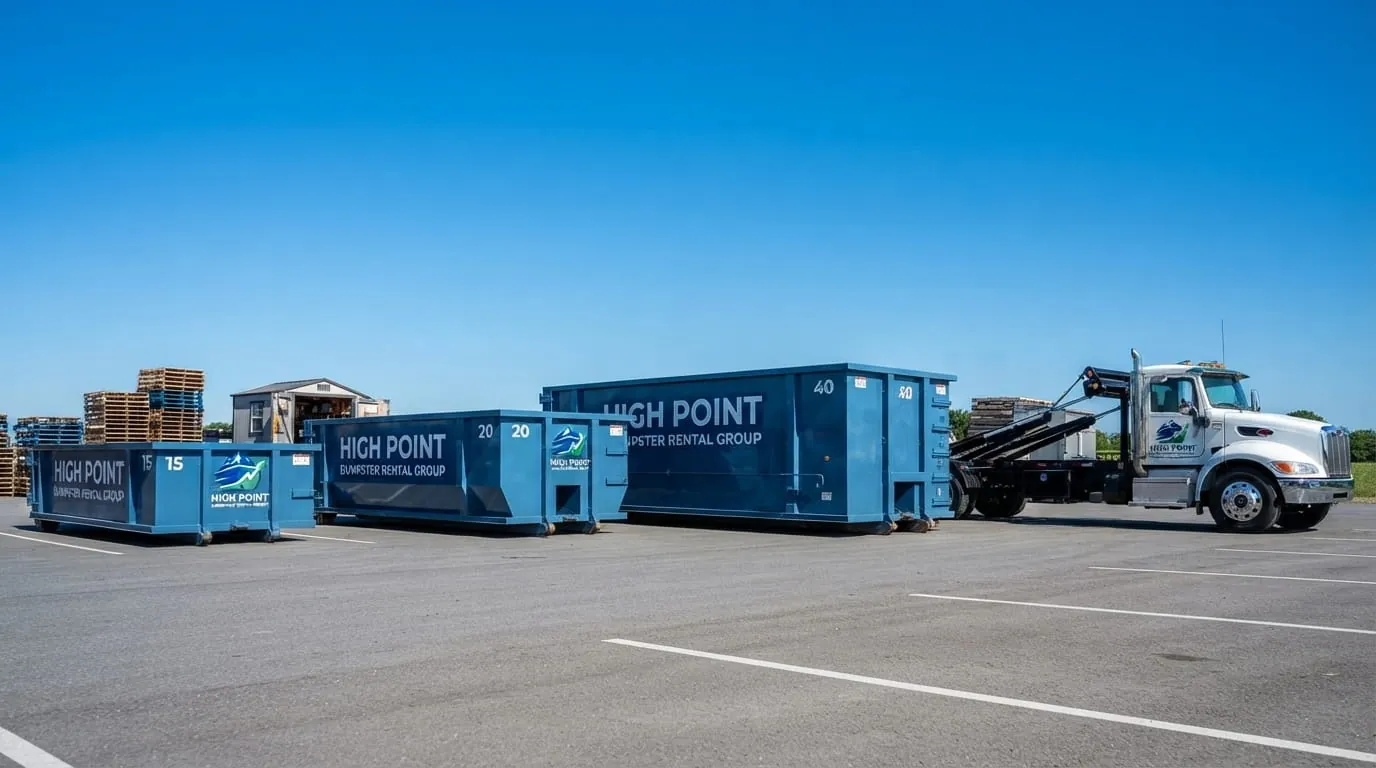
For a typical single-family estate cleanout, a 20-yard dumpster is the workhorse size. It holds roughly the contents of a three-bedroom home's worth of furniture, boxes, and general debris, and its lower walls make it easy to load heavy solid-wood pieces without a dangerous overhead lift. If the home has a full basement, a packed attic, or you are also clearing a detached shed and garage, you may want to step up a size or plan for a second haul.
A few loading tips that save money and strain:
- Break down large furniture when you can; a disassembled dresser nests far more efficiently than a whole one.
- Load flat, heavy items along the bottom and fill gaps with smaller debris so you use the full volume.
- Keep prohibited items out: paint, chemicals, tires, and electronics usually cannot go in a standard dumpster. Set those aside for proper disposal.
If you are unsure which size fits your situation, our team can help you estimate based on the home's square footage and what you are keeping versus clearing. Reach out through our contact page and we will walk you through it.
Pace Yourself: The Emotional Side of the Work
A checklist can make an estate cleanout sound like a logistics problem. It is also grief, and the two are tangled together. Opening a closet that still smells like a parent, finding a handwritten recipe card, or holding a tool a grandfather used for forty years can stop the whole afternoon cold. That is normal, and it is not a failure of efficiency.
Build the emotional reality into your plan. Work in two- to three-hour blocks rather than marathon days. Start with the least personal spaces, such as the garage, utility room, or shed, so you build momentum before reaching bedrooms and photo albums. Keep a "decide later" box for the handful of items you genuinely cannot sort today, and set a firm deadline to revisit it so it does not become a permanent excuse. If multiple family members are involved, agree ahead of time on how disagreements get resolved so grief does not turn into conflict over a dining table.
Coordinating With Out-of-Town Heirs
Many High Point estates involve children and grandchildren who have moved away and are managing the cleanout from another state. Remote coordination works best when one person is the on-site point of contact and everyone agrees to trust that person's eyes. Use a shared photo album or group chat to show rooms, let heirs claim items by photo, and make decisions in near-real time. Schedule donation and dumpster pickups on days the local coordinator can be present, and keep a simple shared list of what has been distributed so nothing is claimed twice.
When to Hire Help
Some families want to do every bit of the sorting themselves, and that is a meaningful way to say goodbye. But the heavy lifting rarely needs to be yours. Once the keep, distribute, sell, and donate items are out of the house, clearing the remaining debris is a job well suited to a crew. Our estate cleanout service is built for exactly this stage: we handle the loading and hauling so you can focus on the decisions that only family can make. For homes with large volumes of mixed junk, our junk removal team can clear a room in a fraction of the time it takes a grieving family on folding chairs.
You can combine approaches. Many High Point families do the sentimental sorting themselves over a few weekends, then bring in a dumpster and a crew for the final clear-out. Whatever the mix, the goal is the same: honor the home and the person, without wearing yourselves down to nothing.
Your High Point Estate Cleanout Checklist at a Glance
| Phase | What to Do |
|---|---|
| Secure | Lock down wills, titles, IDs, jewelry, cash, firearms, and photos before anything leaves. |
| Authorize | Confirm the executor's authority and the probate timeline with the Guilford County Clerk of Superior Court. |
| Sort | Assign every item to Keep, Distribute, Sell, Donate, or Dispose. |
| Sell & Donate | Use local consignment, estate-sale pros, Habitat ReStore, and thrift stores for quality hardwood furniture and usable goods. |
| Clear | Order a 20-yard dumpster for the driveway and haul the remaining debris. |
| Rest | Pace the work in short blocks and ask for help with the heavy lifting. |
When you are ready for the clearing stage, we are here to make it easier. High Point Dumpster Rental Group delivers to driveways across uptown, Emerywood, and throughout Guilford County, and our team understands that this is not just another load. Call us at (743) 229-5872 to talk through the right dumpster size and timing for your family's estate cleanout, and let us carry the heavy part so you can focus on what matters most.

Owner, High Point Dumpster Rental Group — sharing straight advice from years of local hauling across High Point and Guilford County.
Frequently Asked Questions
What should I do first when starting an estate cleanout in High Point?
Secure the valuables and documents before anything else leaves the home. Gather the will, deeds, titles, insurance policies, IDs, jewelry, cash, and firearms, and check hidden spots like freezers, drawer backs, and coat pockets where longtime homeowners often tucked things away. Only after these are locked down should you begin sorting furniture and general belongings.
Do I need court approval before clearing out a loved one's estate?
You should confirm authority first. In North Carolina, the executor named in the will, or a court-appointed administrator, has the legal right to distribute and dispose of estate property. Guilford County estates are handled through the Clerk of Superior Court. Do not sell, give away, or discard valuable items until the estate is opened and the executor gives the go-ahead, since they may need to report an inventory to the court.
What size dumpster do I need for an estate cleanout?
For most single-family homes, a 20-yard dumpster is the right choice. It holds roughly a three-bedroom home's worth of furniture and debris, and its lower walls make loading heavy solid-wood furniture safer. If the home has a full basement, packed attic, or a detached shed and garage to clear too, consider a larger container or plan for a second haul. Most High Point driveways are wide enough to place the dumpster without a permit.
Where can I donate or sell furniture from an estate in the High Point area?
High Point is an excellent market for quality used furniture. For selling, consider local consignment shops, estate-sale companies that run on-site weekend sales, and online marketplaces for larger hardwood pieces. For donations, Habitat for Humanity ReStore locations in the Triad accept furniture, appliances, and building materials and sometimes offer pickup, while regional thrift stores take clothing, housewares, and smaller items. Keep your donation receipts for tax purposes.
How do I manage an estate cleanout when the heirs live out of town?
Appoint one on-site point of contact and have everyone agree to trust that person's judgment. Use a shared photo album or group chat so remote heirs can claim items by picture and decisions happen in near-real time. Schedule donation pickups and dumpster hauls for days the local coordinator can be present, and keep a simple shared list of what has been distributed so nothing gets claimed twice or discarded by mistake.